
The killing of Garda Clerkin
When the IRA detonated a 100-pound bomb under the Jaguar carrying Britain’s new ambassador to Ireland near Dublin in July 1976, it triggered a chain of events that led to one young Garda’s death and the first resignation of a President of Ireland.
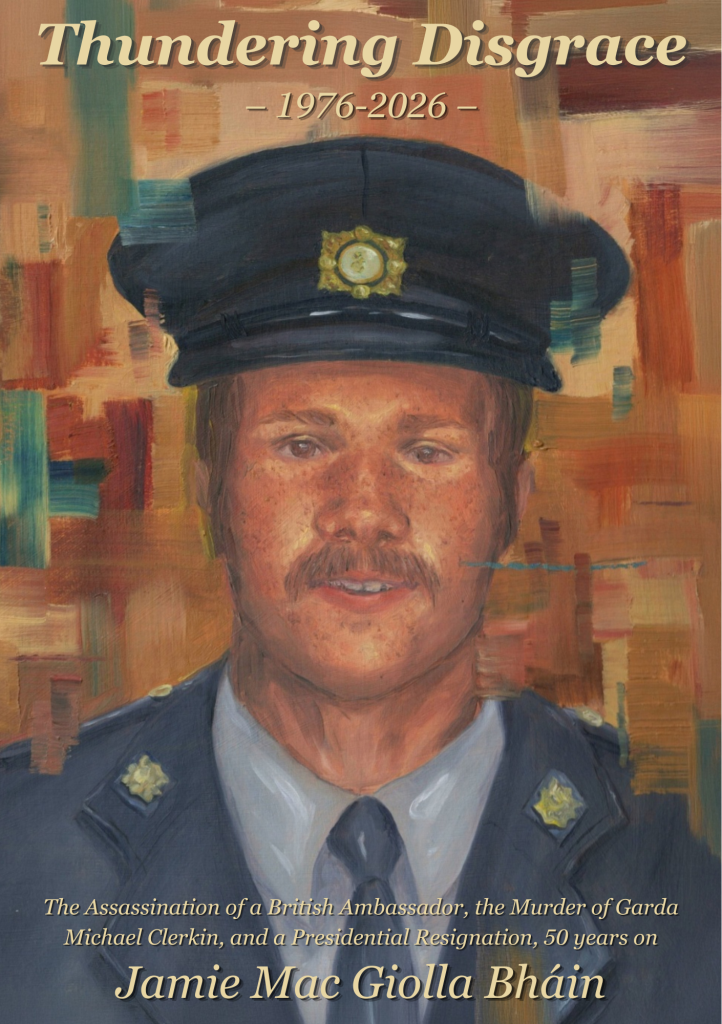
Mourned in Monaghan
Fifty years ago , Great Britain lost an ambassador to an IRA bomb, a family in Monaghan lost a 24 year old member of An Garda Síochána the same way, and Ireland lost a President, who resigned. Now those incidents have been connected in a new book by Jamie Mac Giolla Bháin.
“It brings together the murder of a British ambassador, the killing of a Garda, and the resignation of a President, all within 4 months in 1976. These were not isolated events, but part of a wider story about political violence, the rule of law, and the pressures placed on democratic institutions during the Troubles.” he wrote in an email.
Mac Giolla Bhain (McElwain), who has cousins from Monaghan in Portland, first heard about his own connection to the incidents of 1976 from his father’s mother. ““My grandmother Mary would always say, ‘You know your cousin was Michael Clerkin and he died at the The Troubles. That would make Michael my first cousin twice removed.
“When I got interested in politics...when I was researching the resignation of Cearbhall Ó Dálaigh (President Carroll O’Daley), I found Michael Clerkin connected,” he told Oliver Callan on RTE.
“In Monaghan and Laois, the wounds are still incredibly raw for some, especially the family and colleagues of Michael and those who were first on scene,” Mac Giolla Bhain wrote in that email.
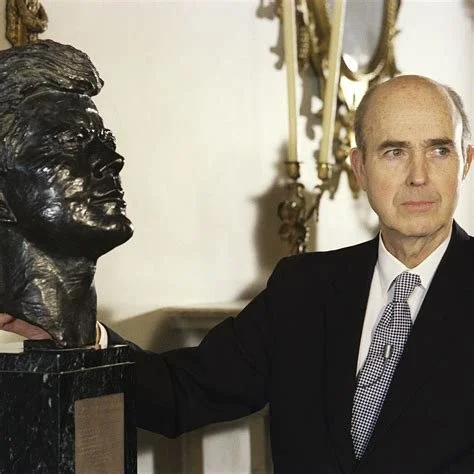
Who was Cearbhall Ó Dálaigh?
After he unexpectedly resigned on October 22, 1976, the New York Times ran the story on page one. “Cearbhall Dalaigh, (sic) a small sprightly good-humored mut with twinkling eyes and a restless, inquiring manner, had been President of Ireland for 23 months before he resigned today.,” the Times man in Dublin wrote.
Why he resigned is what Thundering Disgrace dissects.
“In my opinion, he [President Ó Dálaigh] is a thundering disgrace.”
That blast from Ireland’s Minister of Defense Paddy Donegan was the straw that broke President Ó Dálaigh’s back. He had been criticized for referring tougher anti-IRA laws to the Supreme Court to make sure they didn’t violate Ireland’s constitution. Which is well within the authority of the President.
“The Taoiseach, Liam Cosgrave, had a very bad relationship with President Ó Dálaigh from the start. Paddy Donegan did offer to resign, he tendered his resignation to the Taoiseach, but Cosgrave refused to accept it, twice actually... once the Taoiseach refused Donegan’s resignation, Ó Dálaigh resigned to "protect the integrity of the office,” Mac Giolla Bhain wrote.
The President’s perception that Donegan went unpunished for his comment is why he stepped down and retired to County Kerry. This is a fascinating video clip from October 22, 1976 of President Cearbhall Ó Dálaigh.
Did Donegan really say THUNDERING disgrace?
Or did he drop an f bomb? From the tabloidish Irish Post: He announced this candid opinion — believed in actual fact to have been the even more candid 'thundering bollocks and f****** disgrace' at an army function. The outburst was probably fuelled by alcohol.....
FALSE on both counts. Minister Donegan, a Fine Gael publican from Drogheda, was neither profane nor inebriated, reports Mac Giolla Bhain reliably. He was told so himself by Don Lavery, the reporter who was the only media witness and who has no reason to cover up for Donegan.
Born after The Troubles
Jamie Mac Giolla Bháin is 22 years old. This is his first book. And most likely not his last. He made an interesting comment to Oliver Callan regarding lived experiences in Ireland.
“Throughout this writing process and I think from even before, people of the older generation would kind of say ‘Oh, what do you know? You don’t really know what it was like.’ I was born after the signing of the Good Friday Agreement, after the bombing. What I respond to them is that I’m glad I don’t know what it was like. I’m delighted that I haven’t been around to see terror and distress that were caused. Especially around my own town of Monaghan living 15 minutes from the border with County Armagh.”
Thundering Disgrace: The Assassination of a British Ambassador, the Murder of Garda Michael Clerkin, and a Presidential Resignation, 50 Years On CLICK HERE.
Email Interview with the author
17 October 2026 - Conducted by Bill Gallagher
Are Irish people themselves very aware of what happened and why?
Yes, but in different parts. Most people would know about the assassination of Ambassador Ewart-Biggs. Fewer would know of Michaels story, although many around Monaghan and Laois would remember it. Almost everyone would be aware of President Ó Dálaigh's resignation. However, nobody ever ties the events together and showcases them as the interconnected events that they were. In Monaghan and Laois, the wounds are still incredibly raw for some, especially the family and colleagues of Michael and those who were first on scene.
It seems odd that the President, rather than the Minister who called him out, is the one who resigned. Why didn't Paddy Donegan step down?
The Taoiseach, Liam Cosgrave, had a very bad relationship with President Ó Dálaigh from the start. Paddy Donegan did offer to resign, he tendered his resignation to the Taoiseach, but Cosgrave refused to accept it, twice actually. This event was the straw that broke the camels back in terms of Ó Dálaigh's tolerance of the Office and of the relationship with the Cosgrave Government, so once the Taoiseach refused Donegans resignation, Ó Dálaigh resigned to "protect the integrity of the office".
The real tragedy is the death of Garda Michael Clerkin. Was the President being blamed for his death because he delayed signing the tougher Emergency Powers Bill?
It was the belief of Paddy Donegan that by delaying the signature of the bill for as long as he could, Ó Dálaigh provoked the IRA by finally signing it, who in turn killed Michael. Donegan was wrong on many levels regarding this. Donegan didn't hold the following belief, but it is the more public framing he was trying to place. The President holds no executive authority in Ireland, a condition of this fact is that they can delay a bill from becoming law but only for so long. Ultimatly, they will have to sign it in.
For an Irish American audience here in the Pacific Northwest, why is this episode of Irish history form the mid-1970s significant?
For an Irish American audience, I think this episode is significant because it shows how interconnected Irish and British history really is, and how the Troubles affected people far beyond Northern Ireland. It brings together the murder of a British ambassador, the killing of a Garda, and the resignation of a President, all within 4 months in 1976. These were not isolated events, but part of a wider story about political violence, the rule of law, and the pressures placed on democratic institutions during the Troubles. For an audience in the Pacific Northwest, it is also an opportunity to look beyond the familiar narratives of Irish history and understand the human consequences of that period, particularly for Michael Clerkin’s family and colleagues, whose loss deserves to be remembered in its own right.
The IRA role in all this. What was it? (Context - "34 people were killed by bombs set off by loyalist paramilitaries in July 1976... the Provisional IRA responding the same month by killing the British Ambassador to Ireland and one of his aides" Irish Legal News)
The IRA was responsible for the assassination of ambassador Ewart-Biggs. The emergency legislation brought in would toughen punishment for being a member of the IRA. While the IRA never claimed responsibility for Michaels death, the bomb used in both attacks was identical and likely made by the same person.
30