Ireland considers the way they were. The Irish diaspora too.
Ireland releases 1926 Census. It's kind of a big deal.
And now, the rest of the story. Many of you have studied the 1911 census in Ireland, looking for evidence of ancestors. That was the last census conducted by the British in Ireland until 1926, at which time they were gone from Ireland in all but the Six Counties, so the Irish counted themselves. Having been sealed for 100 years, that census is now open to the public.
A few observations
The tide has turned in Ireland. While the 1926 population numbers are DOWN, the story today is UP - Ireland recorded one of the largest relative population increases in the European Union over the 20-year period from 2003 to 2023, growing by 33% But the new old numbers prove what’s been known for years. In 1926, no other European nation had ever suffered as severe a population decline as Ireland. The entire island has gone from 8 million in 1845 to just over 7 million as of 2022. Nations don't often go backwards in population growth. The 1926 census fascinates because it shows how that decline continued through Rising, War of Independence and Civil War. Not surprisingly the number of Protestants in Ireland was in steep decline by 1926. All those British soldiers and their families heading home increased the size of the Catholic majority but lowered Irish Free State population.
Proof of life
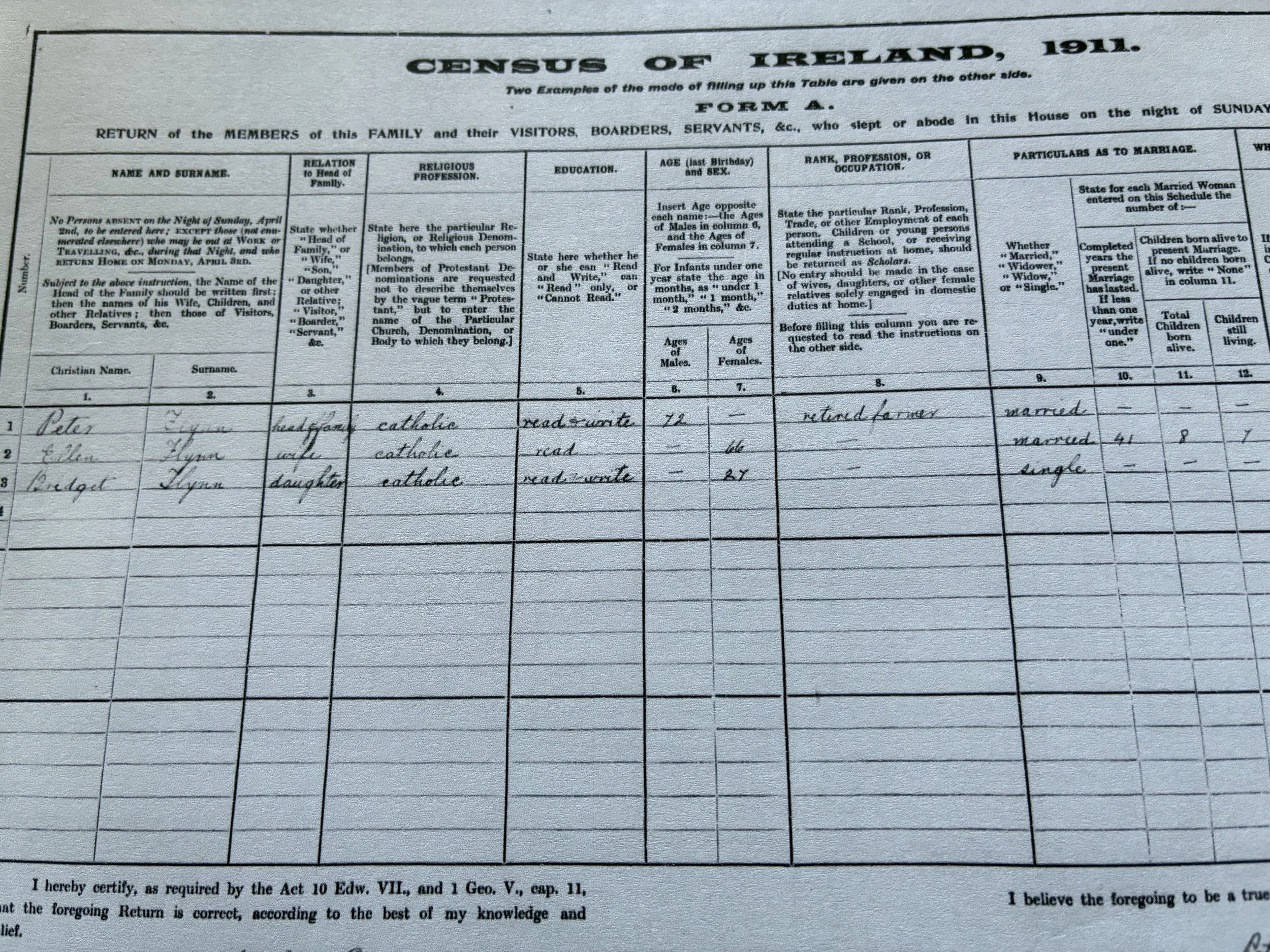
How do you describe the feeling of seeing your grandmother’s name in the 1911 Irish census? There she is. Name written in professional cursive by a civil servant. Maybe you never thought of her as a little girl in the West of Ireland living on her father’s farm. He’s there too. Now, thousands in the Irish diaspora who had family back in a newly-independent Ireland in 1926 can check up on them. Here’s an article explaining how.
More than 1,000 Irish listed in 1926 are still alive
Nancy Lally (nee Byrne) was born in Dublin in 1920. She grew up in the country. She now lives near Chicago. “(The farm) was wonderful,” she told a reporter from the Tribune. “Filthy dirty, but it was healthy and happy. We always had plenty of fun and something to occupy our minds.” With the help of her grandkids, she looked up her name in the 1926 census. But it was her dad’s name she wanted to see. William Byrne, it read in tilted cursive. Seeing her dad’s handwriting, Lally sighed. “God love him,” she said. “William, you were a great man.”
Want to know more?
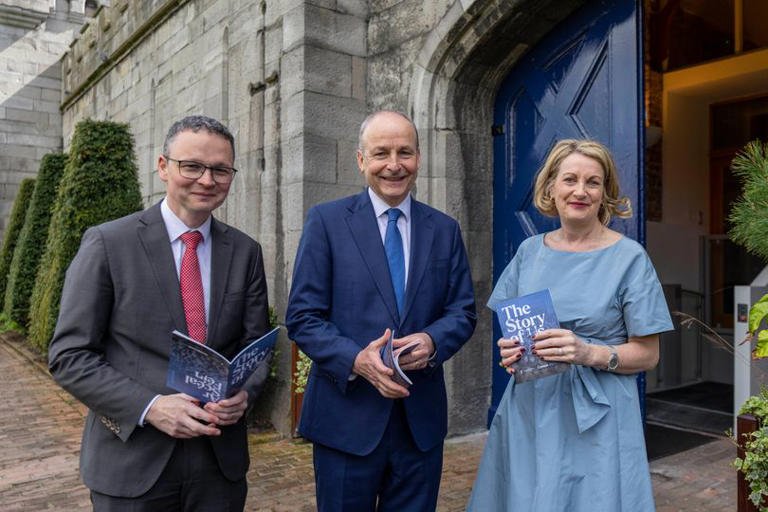
The roll-out of the 1926 census by the Irish Government has been thorough, with Ireland’s political leader (center) Taoiseach Micheal Martin heralding its unveiling after 100 years, “Census 1926 shows the ambition of the new state to carry out a census of the 2.9 million people living in Ireland as part of its programme of nation-building and to do so, so soon after independence, was a bold and visionary decision.” In other words, what a volatile time to take a census. As for the exiled sons and daughters of Eire, “This is a significant day for the country and our diaspora as we see for the first time in a century the records of how we lived in 1926,” said Minister Patrick O’Donovan. There’s a big museum exhibit about the census which will travel around Ireland this year, with a stop at Boston College later this month.
WHY AM I RECEIVING THIS?
Most Sunday and Tuesday mornings I send out a blog post which will appear in the Thursday Edition of the PDX Hibernian Independent. You're receiving this because a. you asked to b. I owe you content for supportng my short-lived Substack swing of the bat or c. I thought you might like a preview of the PDX HI.
PDX HI Quiz. Where is this?