
Happy Birthday Brendan Behan
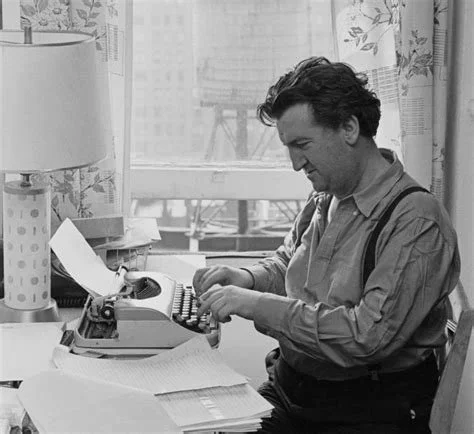
Brendan Francis Aidan Behan
Doubtless a very high percentage of you who are reading this know full well who Brendan Behan was. He was an Irish writer. One of the best. But also, one who by his outrageous, self-destructive behavior managed to put off plenty of Irish people who otherwise would have been proud of this poor boy from Dublin surviving eight years behind bars for his republican crimes, writing about it and becoming famous. And infamous.
How many of you who do know who Bredan Behan was, read any of his writing, or saw any of his plays? He was known more for the tabloid news stories written about his drunken stunts and inebriated interviews than he was for the award-winning plays or highly praised memoir he managed to write before the booze crippled his creativity.
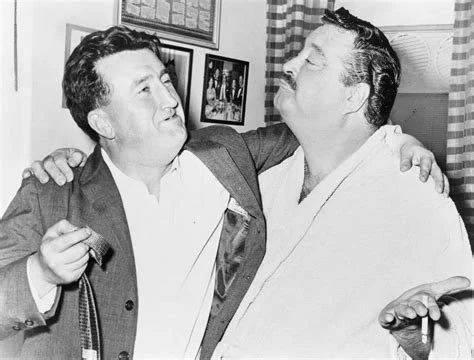
“If Brendan Behn had been born Jewish in New York, he would have had a fantastic career as a Lenny Bruce. He was a speaker, not a writer. He could have been a night club entertainer, a television personality. He could have become like Jackie Gleason.” RTE One Documentary
Born an Irish republican. Born to write.
Brendan Behan was born on February 9, 1923. One year earlier, Michael Collins and his officers had taken over the governing of 26 counties of Ireland from the British. A civil war was being fought by the two factions of the IRA. Behan later joined the Anti-Treaty IRA as a teenager and engaged in efforts to finish the job that Collins and company had begun and free the Six Counties from British rule. He was sent to Liverpool with explosives to blow up a British battleship. He was caught and ended up behind bars in England and Ireland from the age of 16 to 24. He learned the Irish language in prison, but more importantly, he listened and observed and later turned his penal servitude into literature.
When Brendan was a boy, his father Stephen,a house painter, would read the classics of world literature to him and his three brothers. His mother Kathleen (nee Kearney) was close friends with “Mick” Collins. “I was taught to hate the English, so I taught Brendan to hate them,” she once said. His uncle, Peadar Kearney, wrote The Soldiers Song (Ireland’s national anthem) and his brother Dominic wrote the greatest “rebel song,” The Patriot’s Game.
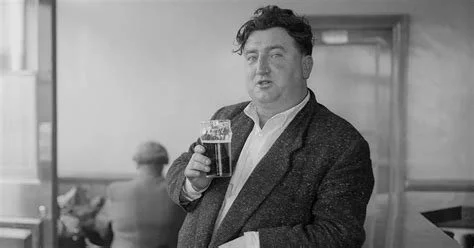
1960. Interviewer: “What would you like said about you in fifty year’s time?” Brendnan Behan: “That I celebrated my 87th birthday.”
The Essential Brendan Behan
For the record, Behan the writer left us three important works: 1954: The Quare Fellow, an anti-capital punishment play based on his prison experiences. 1958: The Hostage, a play sympathetic to the fate of a British soldier. 1958: The Borstal Boy, a memoir about his time behind bars. There were lots of other books published, but none matched these three key works; later works by Behan were merely transcriptions of his taped ramblings and collectios of odds and ends. There have been at least eight memoirs and biographies written about Behan.
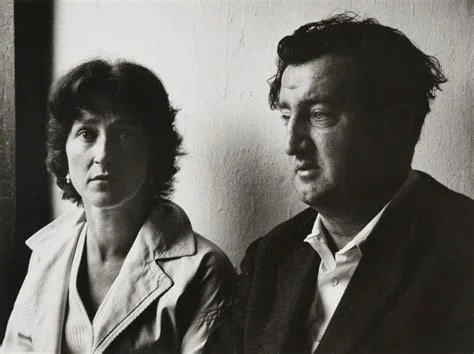
Beatrice Behan, author of My Life with Brendan
Behan met his future wife Beatrice ffrench Salkeld when she was 17. Her father introduced them at Ryan’s Bar in Dublin, she recalled. He was just out of prison. They married in 1955. She wondered why he didn’t invite any of his family to the wedding – not even his parents. There were “too many relatives," he told her.
“Oh, she was a saint,” is how some people describe good women like Beatrice who are married to notorious,misbehaving men.
Beatrice Behan never sought sainthood. She knew what she was getting into with Behan, though at the beginning in the mid fifties she wasn’t too worried about his drinking. She would admit during a radio documentary years after he died that being with him was difficult but it was also fun, as when he got a standing ovation in a Paris theater as The Hostage won a major French award. (The Hostage also won the Tony for Best Play in 1970.)
Friends asked her why she never left him as his drunken escapades went from amusing to toxic near the end of his short life. “You don’t leave someone when they’re low. If I was to leave him, it would be when he was back on his feet and successful again,” she said. He was 41 when he died of acute alcoholism three days after St. Patrick's Day in 1964.
Her husband was generous to a fault; he once gave a starving poet in New York $80 even though Allen Ginsberg didn’t ask for it. So, when he died, she made sure all his debts were paid.
Behan Notorious
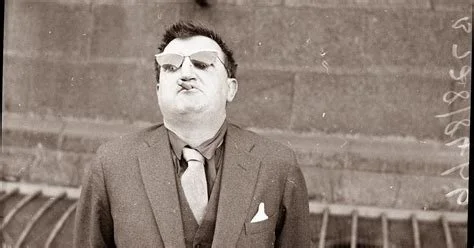
Brendan told Beatrice in London in 1959, “All you have to do over here is get drunk to be famous.” He did just that during a BBC television interview conducted by an esteemed presenter named Malcolm Muggeridge and seen by 10 million people. He was well-jarred, as they say. The audience had a hard time understanding a word he slurred. He was yanked off the set halfway through his appearance. The Brit tabloids couldn’t get enough of Behan’s antics after that. When he got to New York, he became once again a sensation for his rowdy behavior. And it sold newspapers. He appeared on American television with Edward R. Murrow and was only slightly less plastered than he was on the BBC. In both interviews he was joined by his good buddy Jackie Gleason, who seemed sober compared to Behan.
Many, many Irish in America were not amused. This stage Irish drunk was not the way they wanted to be seen by their non-Irish neighbors. The Ancient Order of Hibernians banned him from marching in their St. Patrick’s Day Parade in 1961. Beatrice travelled with Brendan to San Francisco where she got a phone call from a woman who told her, “Get yourself and that drunk out of our city.”
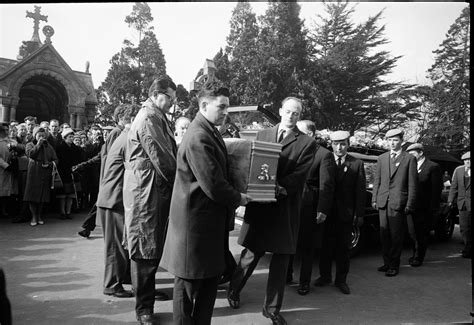
The funeral of Brendan Behan
Dublin had rarely seen a funeral like the one for Brendan Behan. Keep in mind, he had alienated many Irish people like no writer since Jame Joyce. Even though he had especially angered members of the Official IRA (the ones who never accepted the Treaty that partitioned Ireland) with his empathy for a British soldier in The Hostage, he was afforded full honors on the route to Glasnevin Cemetry. On the 45th aniversry of his death, An Problacht, the IRA newspaper, buried the hachet. As a writer and raconteur, Brendan dramatised and exaggerated his IRA activity. Despite this and the later role he adopted for the British and American media as the stage rebel, Brendan remained on good terms with his republican friends. So it was that Brendan Behan, after a tragic early death due to alcohol and diabetes, was accorded a republican funeral."
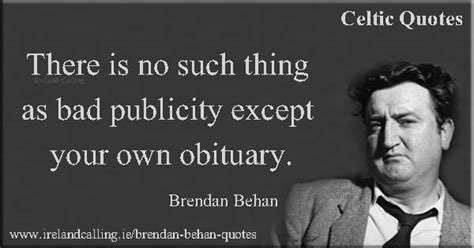
Bad Publicity?
New York Times - DUBLIN, March 20—Brendan Behan, the Irish playwright, died this evening at Meath Hospital. He was 41 years old.
The roistering author, whose life was as broad as his works were ebullient, entered the hospital on March 10 suffering from diabetes, jaundice and kidney and liver complaints—aggravated by his renowned bouts withh drink.
It was this warmth for the human and an unfailing ear for the accents of living speech that filled his plays and prose to overflowing. The brawling, the boisterous, the antic were the themes of his life and his work.
His progress through iife was disordered and uncompromising. It included long spells in jails and hospitals, countless rows with pub keepers and the police, and a wilderness of emptied bottles of Guinness stout and Irish whisky.
“As regards drink,” he wrote, “I can only say that in Dublin during the Depression when I was growing up, drunkenness was not regarded as a social disgrace. To get enough to eat was regarded as an achievement. To get drunk was a victory.”
in 1961 he was arrested and jailed in Toronto for drunkenness, barred from the St. Patricks Day parade in New York for being a “disorderly person,” fined $250 for creating a disturbance in a Hollywood tavern, and presented with the keys to Jersey City. He also managed to miss his boat home.
To those who regarded him with disdain — a view held among some Irish intellectuals —he was a stage Irishman, a strange mixture of the naive and the sophisticated. His plays were looked upon as a shapeless collection of bright quips that could be given polish only by a talented director.
To his admirers, who are many, he was a writer of immensetalent, capableof transferring people live and warm from their natural habitat to the stage or printed page.
His own view was given at the end of “Brendan Behan's Island”:
“You can take it or leave it, and that's the end of my story and all I am going to tell you and thanks for coming along.”
Want to know more about Brendan Behan?
A Hungry Feeling - Excellent documentary narrated by Liam Clancy. Includes interviews with Beatrice Behan.
The Writer, The Rebel and The Rollicking Boy - RTE One documentary in which seldom is head a critical word. And it's almost two hours long.
Brendan Behan - The Roaring Boy - Short documetnary on his life and wild times.
An Problacht Remembrance - How Sinn Fein sees Behan. (All is forgiven.)