
With Katie Taylor you can believe the hype
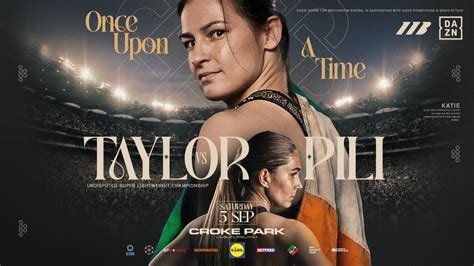
On Saturday September 5 at 2 P.M. on the West Coast (approximately) Katie Taylor will fight her final fight.
Katie Taylor fought her first fight in Dublin’s National Arena on Halloween in 2001. She was 15. She won that first amateur bout, which was also the first time Ireland had ever sanctioned a fight matching two women. Katie fought 188 more bouts as an amateur and won all but 12 of them. She started getting paid to fight by going professional 15 years later. Wembley Stadium in London was the venue for the first of her 26 fights. Her record is 25 and 1 with six knockouts. The venue for the final fight of her career this Saturday in Dublin will be Croke Park.
Who is Katie Taylor and why should you care? - Click here for Katie’s Irish story 16 July 2025.
From 2019 to 2024, Katie Taylor was the undisputed and unbeaten World Champion in the Women Lightweight division. In 2012 she won the gold medal at the Sumer Olympics in London in her weight class. She also carried the Ti Color leading the Irish Olympians into Wembley. She won the 2026 ESPY Award as Best Boxer (of either gender).
Any way you cut it, Katie Taylor cannot be ruled out as Ireland’s Greatest Boxer or even the Greatest Woman Boxer ever….anywhere.
Because of her determination, the final fight of her career is taking place at historic Croke Park, where in 1920, members of the Royal Irish Constabulary attacked the crowd at a Gaelic football match between Dublin and Tipperary, killing 12 fans and one player. It’s known as Bloody Sunday (the first one). When negotiations to hold this weekend’s fight at Croke stalled, Katie offered to fight for free. (She won’t have to and is expected to walk away with $2.3 million.)
Here is all you need to know about the fight and Flora Pili, her opponent from France. If you want to watch it here in the States, check out DAZN Sports. (It’s $25 for a month’s worth of other fights after this one and some UEFA soccer.)
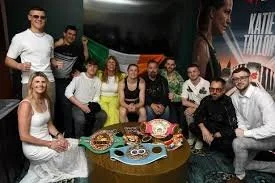
Katie Taylor recently married Sean McCavanagh, a widower from Massachusetts with five kids by his late wife. Members of her Irish and American family gathered after a recent fight.
The only other time boxing came to historic Croke Park
"Ireland was a beautiful place, man, they didn't know me, but they treated me like I was a king ... like I was Ali."
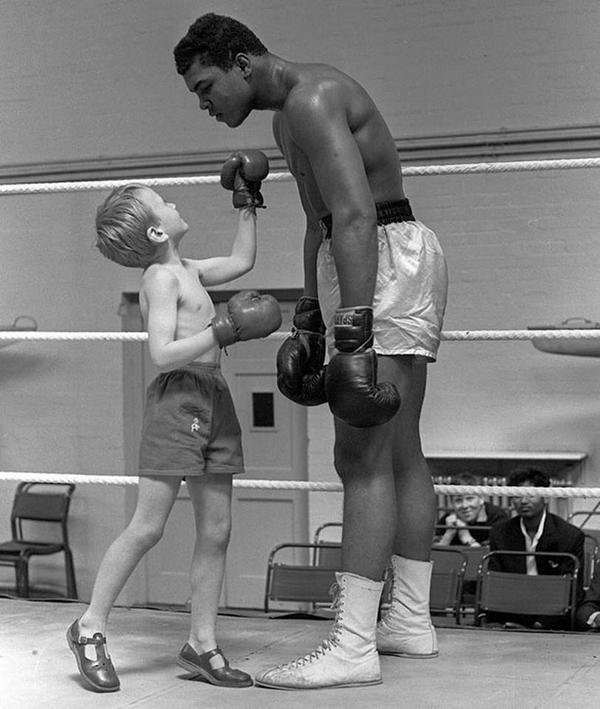
Muhammad Ali's fight against Al ‘Blue’ Lewis in Croke Park, Dublin in July 1972.
The fight was organised and co-promoted by a former circus-strongman, a London-based publican called Butty Sugrue, originally from Killorglin, Co Kerry. (RTE)
There had never been a sporting event like the Ali fight that summer. And there hasn’t been another boxing night at Croke Park since. Until Katie Taylor insisted on fighting there.
This quintessentially Irish story of a young Ali in Ireland has more moving parts than a Swiss watch. More memorable characters than a Damon Runyon story. Ali’s seven days in Ireland are the subject of at least one documentary (good luck finding it), a book (still in print) and a very entertaining podcast (which I heartily recommend).
Dave Hannigan, who wrote the book, spoke on the podcast about how much Irish crowds loved Ali. And how he went out of his way to return their affection. He was just coming off a forced retirement for his opposition to the Vietnam War and was ready to rumble. Two well-known writers of the time – Pete Hammil (A Drinking LIfe) and Budd Schulberg (On the Waterfront) - covered Ali’s Irish adventure. Ireland changed Ali, they told Hannigan.
“Ali was stunned how white Ireland was. Ireland was the whitest country he’d ever visited. That was shocking to him. Equally shocking...was how much love he got. They thought the experience changed hm; that he was not able to be as racially polarizing after these white people in Dublin, you know, absolutely worshipping him.”
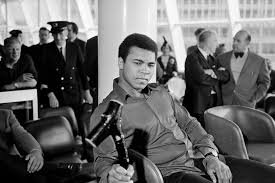
Ali with his shillelagh, which he said he wouldn’t need to beat up anyone who challenged him.