
What is wrong with this image?
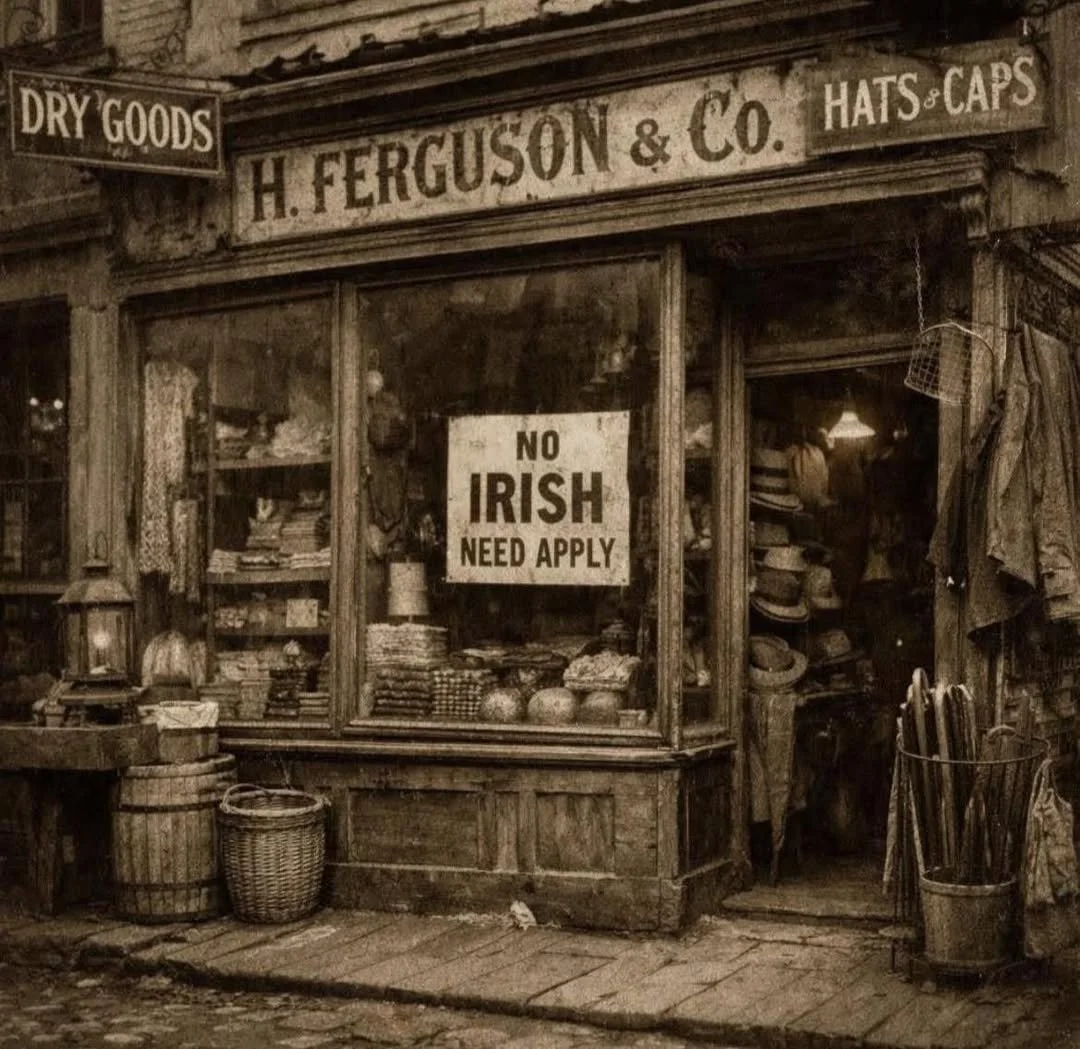
Source: some social media site.
There’s a lot wrong with this image. What was once an argument over whether such signs really existed has become a bad meme. Not only did Irish immigrants in Amerikay in the second half of the Nineteenth Century face blatant discrimination, here’s the sign that proves it. Too bad it's as phony as a three dollar bill.
This sign is an obvious fake, right? Yes. There was definitely discrimination against working class Irish men and women, but this image is not a genuine sign of those times (1850 – 1910). Most of the Irish immigrants in those days were Catholics. Many of the bosses were Protestants who didn’t want to hire Catholics because their Protestant employees didn’t want to work with them. God forbid a Catholic should become a foreman and tell them what to do.
No-Irish-Need-Apply type discrimination couldn’t have been systemic since enough Irish were hired to eventually manage many parts of the “system.” Men and women with roots in Ireland rose to the top in America across the board despite the same kind of top-down discrimination faced in the USA by anyone who wasn’t a WASP with money back then. So, for argument's sake, let’s say that individuals did the discriminating, not “the system.” Which brings me to the above image for H. Ferguson & Co.
How many people, seeing it online, would say, “Wow, I had no idea it was so tough for the working Irish back then”? That’s a genuine reaction to a fake image.

I asked Claude about it. The AI wizard from Anthropic was fooled, calling it “a stark reminder of the discrimination Irish immigrants faced in 19th-century America.”
How can you tell it’s fake?
These are just the ways that I figured it out.
The tone of the photo is too good. We’ve all seen photos taken 130 years ago.
Who was H. Ferguson? That’s a Scottish Gaelic surname. Who among the Irish would spend money at a shop with anti-Irish advertising? Would a Scots-Irish immigrant like Mr. Ferguson turn down anyone’s business?
This sign left out the important words HELP WANTED. Otherwise, it might mean Irish need not bother applying for credit.
Look at the hats inside the door. Who wore hats like that in those days? And the hand towels and dry goods displayed in the window.? Too perfect.
If you’re not sure if a photo is fake, drag and drop and ask AI.
Here's what Claude concluded when the flaws were detected, "Nothing is quite wrong enough to immediately flag, but nothing is quite right enough to be fully convincing either.
Here's what the real sign looked like.
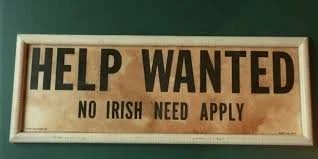
The NINA Controversy
It's been more than a decade since there was a tempest over whether such signs ever really existed. A retired professor wrote a scholarly article suggesting any anti-Irish discrimination was minor and claiming a bunch of hysteric Hibernians imagined institutional bias where there was none.
The NINA myth fostered among the Irish a misperception or gross exaggeration that other Americans were prejudiced against them, and were deliberately holding back their economic progress. Hence the "chip on the shoulder" mentality...No other European Catholic group seems to have shared that chip on the shoulder (not the Germans or Italians—not even anti-Irish groups such as the French Canadians). - Richard Jensen, Ret. University of Illinois in the Journal of Social History 2002.
Thirteen years and thousands of hours of arguments later, the same journal published a rebuttal to Jensen proving anti-Irish bias was a realt thing written by a 15 year old student named Rebecca Fried.
Jensen’s claims have largely been discredited in recent years, especially after Rebecca Fried – an 8th grade student from Washington DC – published an academic article beyond her years providing multiple examples of ‘NINA’ signs in newspaper archives. Irish Post
Fried, an eighth grade student at the Sidwell Friends school in Washington, DC, found overwhelming evidence that the NINA signs were very real and very prevalent. Irish Central
Best News Article - Here's an archived version of the original Washington Post story from August 2015.
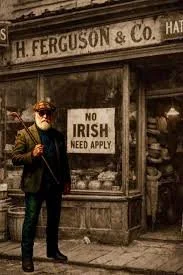
Now we KNOW it's fake!
The Bottom Line
Irishmen and Irishwomen who were new to America before, during and after the (American) Civil War were often passed over for employment opportunities because of anti-Catholic prejudice in the private sector. So what? Past behavior like the kind seen in the NINA signs matters because that kind of bias, though currently rare towards the Irish, never goes away. In fact, some Irish in America are guilty of the same animus towards other ethnic neighbors today.
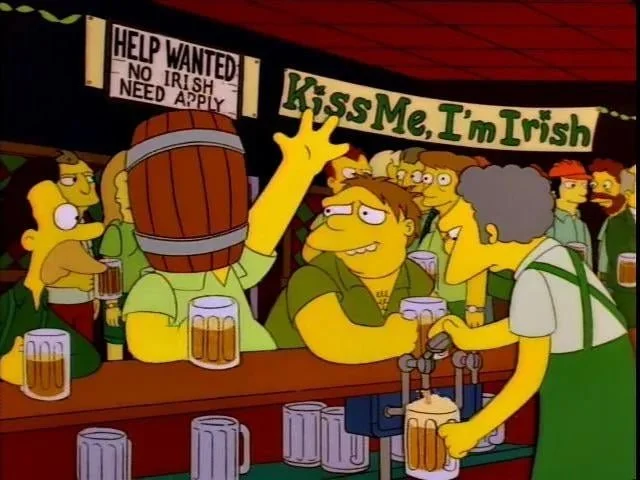
Our revenge is laughing at Simpson's episodes written by famous American Irishman Conan O'Brien.
WHY AM I RECEIVING THIS?
Every Sunday (except Easter) and Tuesday morning I send out a blog post which will appear in the Thursday Edition of the PDX Hibernian Independent. You're receiving this because a. you asked to b. I owe you content for supportng my short-lived Substack swing of the bat or c. I thought you might like a preview of the PDX HI.