
When Irish America woke up
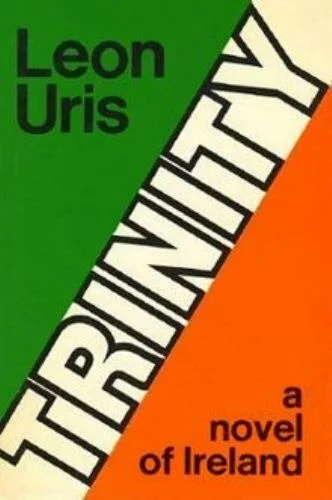
The best-selling book in America during the Bicentennial Summer of 1976 was a 900-page novel about Irish history from The Famine to The Rising written by a Jewish American author.
Trinity, by Leon Uris, would sell more copies than any other work of fiction for most of 1976 and wake up millions of Irish Americans to their origin story. By this time in our history, Italian Americans had the two Godfather films. Black Americans had Roots, the Alex Haley historical novel soon to be a TV mini-series. Jewish Americans had Exodus, book and movie. And now the Irish had Trinity. Call it the cultural revenge of the hyphenated Americans.
"My parents never really told me about who we are and where we came from. I finally found out when I read 'Trinity' a few years ago." Producer William Spencer Reilly, a New Yorker and fourth-generation Irish-American.
We never got the movie version of Trinity. Anyone who has read it can understand why. Reilly produced a stage version in 1992 that ran six hours with 29 actors playing 200 different roles.Trinity: The Play never made it out of rehearsals, apparently.
"I’m Conor Larkin, I’m an Irishman and I’ve had enough."
Irish history can be complicated. By focusing on the fates of three families near Derry during tough and tougher times, Uris does a fair job providing a coherent narrative. All those characters exist on the stereotype spectrum from wretched Catholic peasants to noxious Protestant millionaires. Big books like Trinity don’t allow for more considered character sketches than what we get of the superhero protagonist Conor Larkin. He’s the stuff of Irish legend; leader of men, master craftsman, able to run through a brick wall, three men couldn’t bring him down. Larkin was a sensitive and tormented heroic loner. Complicated in other words.
Not all Protestants are bad people. Most Brits are.
David Ben-Gurion, the George Washington of the State of Israel and its first Prime Minister, supposedly called Exodus by Leon Uris, published in 1958, the greatest work of pro-Israel propaganda ever written. Trinity qualifies in that regard for Ireland. Uris unapologetically adopted the Irish Nationalist cause after he spent seven years researching Trinity and was smitten with the struggle that has lasted centuries; a struggle that was still very much alive and known as The Troubles in the Summer of 1976 when Trinity became America’s beach book. That anyone who read 900 pages about that struggle would be inclined to support it is a given.
Uris never pretended to be objective. Here's what he writes about the celebrations in Ireland marking Victoria’s sixtieth year on the throne.
“For the Irish, Victoria’s Diamond Jubilee was repugnant. All the banalities of empire were magnified by the event, a reminder that we were a subject people. The first to be colonized and reduced to servitude citizenship. Throughout this great celebration many Irish served faint notice that the old bitterness had not diminished and that our long HIbernina hibernation was about to come to an end.” The storm was gathering.
It was said at the time it was published that Trinity over-romanticized the IRA, thus creating sympathy for their cause during The Troubles. True. But as legendary Irish American journalist Pete Hamil wrote in his review of Trinity, “In all of its history the I.R.A. and its predecessor, the Irish Republican Brotherhood, have not come close to committing the crimes that the owners of Ulster have committed against Protestants and Catholics alike.”
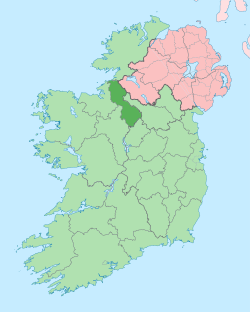
How the Crown kept Ireland divided
Critics also tut-tutted that Trinity oversimplified a complicated history. Also true. But in doing so it sheds light on how Britain became Great Britain. Hint: it wasn't by being nice to conquered populations like the Irish. The British strategy was to divide and conquer. “The Crown using us against our own people,” is a constant in Trinity. To survive often meant to compromise with the overlords from across the Irish Sea. Some Irish went to work for the Brits, either by joining the Royal Irish Constabulary: “Being forced to join those devils was the only way to make a living.” Or, even worse, by sharing information with authorities for a schilling: “Informers - the lepers of Irish life.” (Note: My great grandfather Edward Scully joined the RIC and rose to the rank of Sergeant in the late Nineteenth Century.)
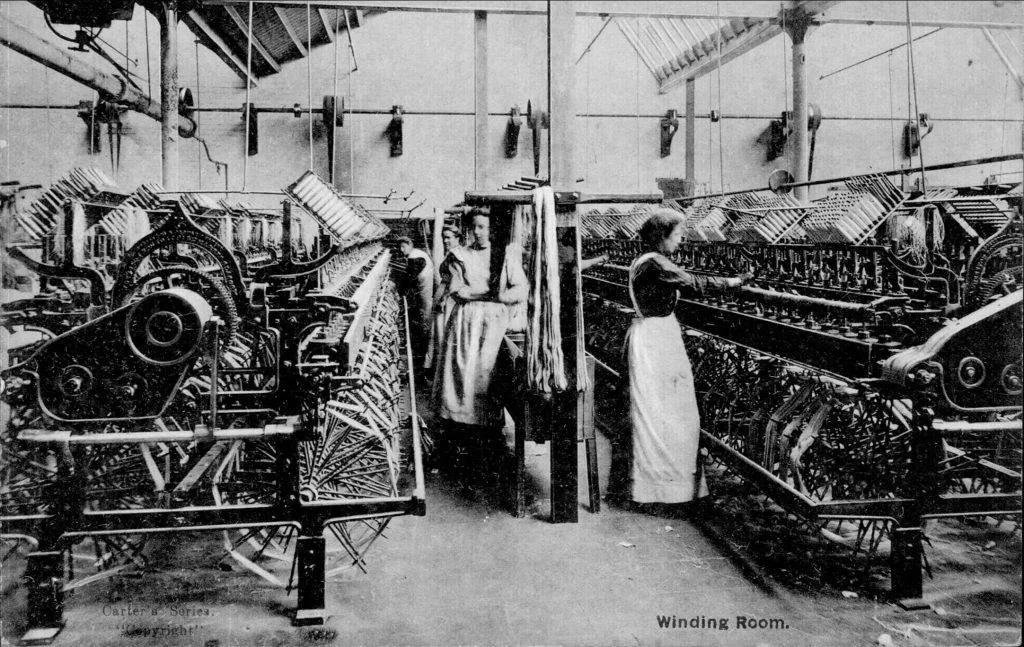
Machines doing men’s (and women's) work
Ultimately, it wasn’t the Great Famine or the British who radically changed Irish society at the dawn of the Twentieth Century. It was industrialization. Allow me to quote Conor’s father Tomas Larkin who described a future in which machines do the work of men, “It will be the end of us in time," said he.
“How can a man say otherwise? If a machine does the work of twenty, then nineteen must give up their farms and move into the city. Those who move to the city will not be making their own cloth as we do or building their own homes or growing their own food. They will have to buy everything, and in order to do so they will have to work in factories on other machines which make the things they have to buy. It’s mind-bending, Conor, but machines on the land are our death knell. Everything we fought for out here will be gone. The machine will do what the famine and the British weren’t able to do. And the cities will grow bigger and uglier and dirtier.”
The value of Trinity for anyone wondering what life was like in the north of Ireland more than a century ago is the detail provided about enduring traditions like the lambeg drums that are still a feature of Orange triumphalism – 5 feet in diameter and 2 feet thick, a “Scottish concoction which gave off a shattering, horrendous boom. Or this description of the venerable Gaelic Athletic Association games - “amateur sports played for pride with overtones of Nationalism.”
The sequel - "a disappointment"
Twenty years after Trinity, Uris published the follow-up. It was half as long and nowhere near as well-accepted as the original. In fact, the career of Leon Uris, which included best-selling works of historical fiction like Battle Cry, Exodus, QB VII and Topaz, peaked in 1976.