
JFK in PDX 66 years ago on May 19
REMINDER - The story of JFK's trip to Ireland in 1963 will be told Thursday May 21 at Kells Restaurant (112 SW 2nd Ave.) by Hibernian Pat Casey. Professor Pat has taught History at local colleges and is a graduate of Notre Dame, University of Oregon and University of Portland. Pat will present at Seven P.M. Here's the story of JFK In Oregon.
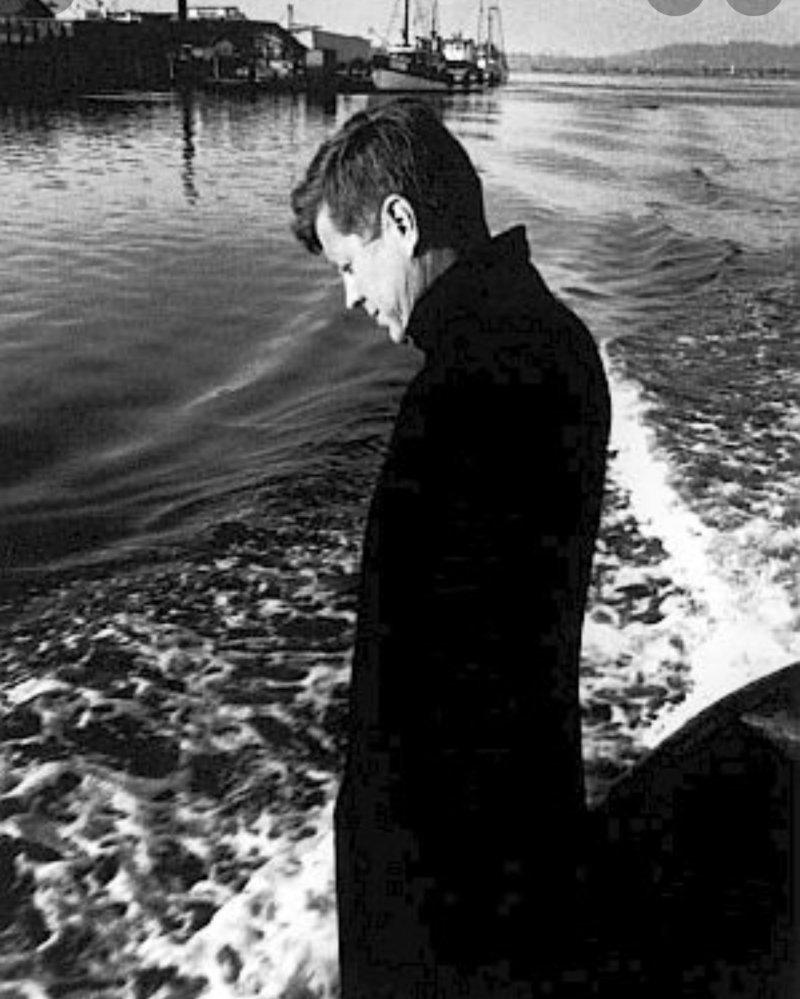
Coos Bay - 6 November 1959 - PHOTO COURTESY OF PARADE MAGAZINE
Senator John Fitzgerald Kennedy (D. Mass.) knew he had to win the Oregon Democratic Primary on May 20, 1960 to have any hope of winning his party’s Presidential nomination that year. So, he came to Oregon early and he came often.
His constant campaigning paid off:
KENNEDY DEFEATS MORSE IN OREGON, WINNING 7TH TEST; Three Other Democrats Run Far Behind in Primary -- Nixon Not Opposed - NY Times
Looking back on that campaign in Oregon, it’s hard not to marvel at the pace the candidate and his staff maintained. That same pace applied across the country helped carry JFK to the White House in November.
People forget that his victory over Richard Nixon in November was incredibly close. He got 49.72% of the national popular vote to Vice President Nixon’s 49.55%. In the electoral college, it was a different story, Kennedy winning 303 electoral votes (but not Oregon’s six) to Nixon’s 219. In May 1960, he won the Oregon Democratic Primary easily with 51% of the vote to Senator Wayne Morse’s 32%. Hubert Humphrey and LBJ were not a factor. Nixon nailed down 93% of the GOP vote but Nelson Rockefeller found a few Never Nixon Oregon Republicans.
With perfect historical hindsight, here are five takeaways from the Kennedy campaign in Oregon 197 - 1960.
ONE. THE KENNEDY CAMPAIGN WAS AN ALL HANDS ON DECK OPERATION. When his father Joseph P. Kennedy gave his son his blessing to run for President on Thanksgiving night in 1957, he told him, ““Just remember, this country is not a private reserve for Protestants. There’s a whole new generation out there and it’s filed with the sons and daughters of immigrants from all over the world and these people are going to be mighty proud that one of their own is running for President. And that pride will be your spur, it will give your campaign an intensity we’ve never seen in public life.” JFK’s response was, “Well Dad, I guess there’s only one question left. When do we start?” Source: The Road To. Camelot - Inside JFK's Five-Year Campaign by Thomas Oliphant and Curtis Wilkie.
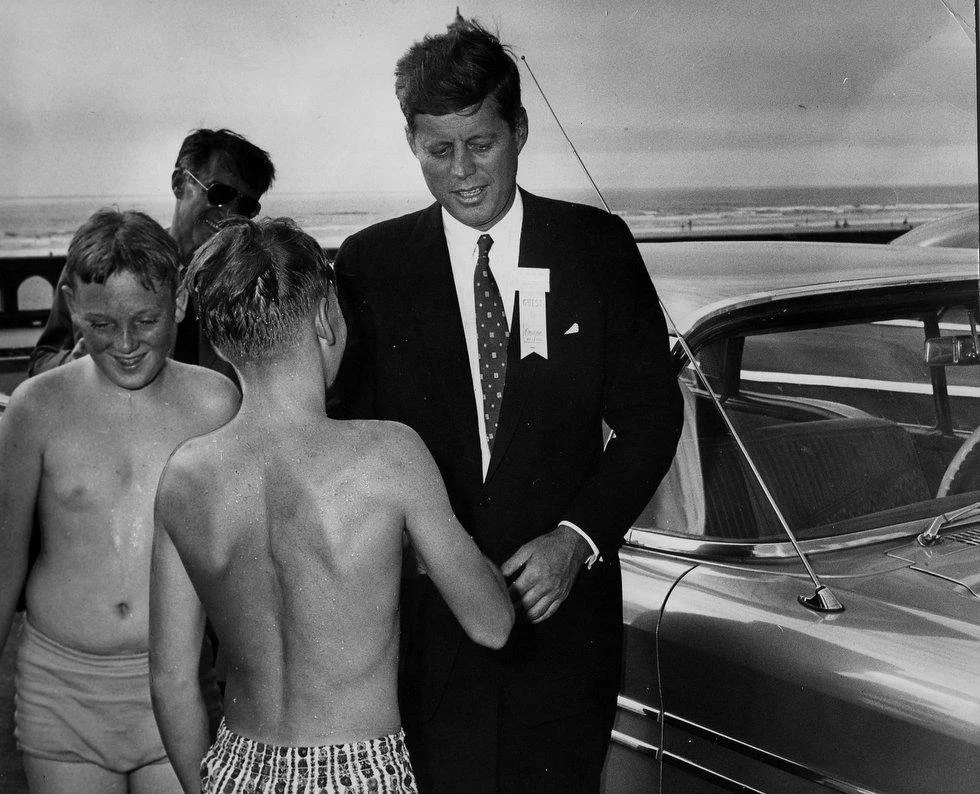
Seaside - 3 August 1959.
TWO. JFK WENT WHERE NO OTHER PRESIDENTIAL HOPEFUL HAD EVER GONE IN OREGON. During the two days he campaigned here in February 1960, he did 15 events in five cities. In April he did 13 events in six cities. Before the May 20 primary he did nine events in five cities that month. Imagine a presidential candidate these days visiting these Oregon cities: Portland. Salem. Eugene. Medford. Seaside. Klamath Falls. Albany. Ashland. Beaverton. Corvallis. Newport. The Dalles. Hillsboro. Saint Helens. Springfield. Toledo. Imagine a candidate coming here at all these days. Kerry Tymchuk, Boyle Family Executive Director of the Oregon Historical Society, misses those days. “By the time our May primary occurs in presidential election years, the nominees of each party have all but been decided, and all that we see of the candidates is a brief stop in Portland for a fundraiser and perhaps a rally,” he wrote on the occasion of what would have been JFK’s One Hundredth birthday.
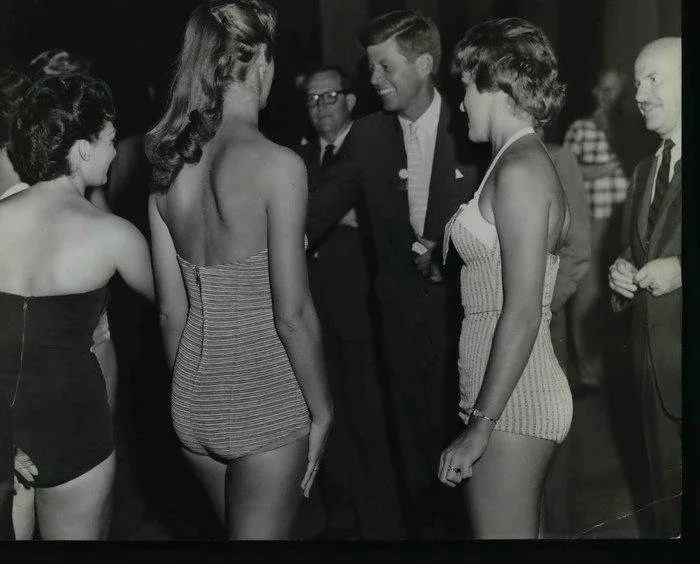
AFL-CIO Convention Seaside 1959. JFK managed to swing some labor votes away from Senator Wayne Morse.
THREE. JFK CONFRONTED THE CATHOLIC QUESTION IN OREGON. Would American voters put a Catholic in the White House? How do you fight a whispering campaign? Those two questions loomed large over the campaign in Oregon. JFK decided to tackle the question directly. Here's what he said during an interview with KXL Radio in 1958,“I will say that in the thirteen years I’ve been in congress, I’ve seen no evidence that the American people make their judgment based on this question. There are so many questions facing us in the United States which are so important that really doesn’t seem to me to be a matter of the greatest public importance, where I might go to church on Sunday.” In many campaign appearances, when asked about his religion he responded, “ That’s funny, when I signed up for the Navy in World War Two they never asked me my religion.”
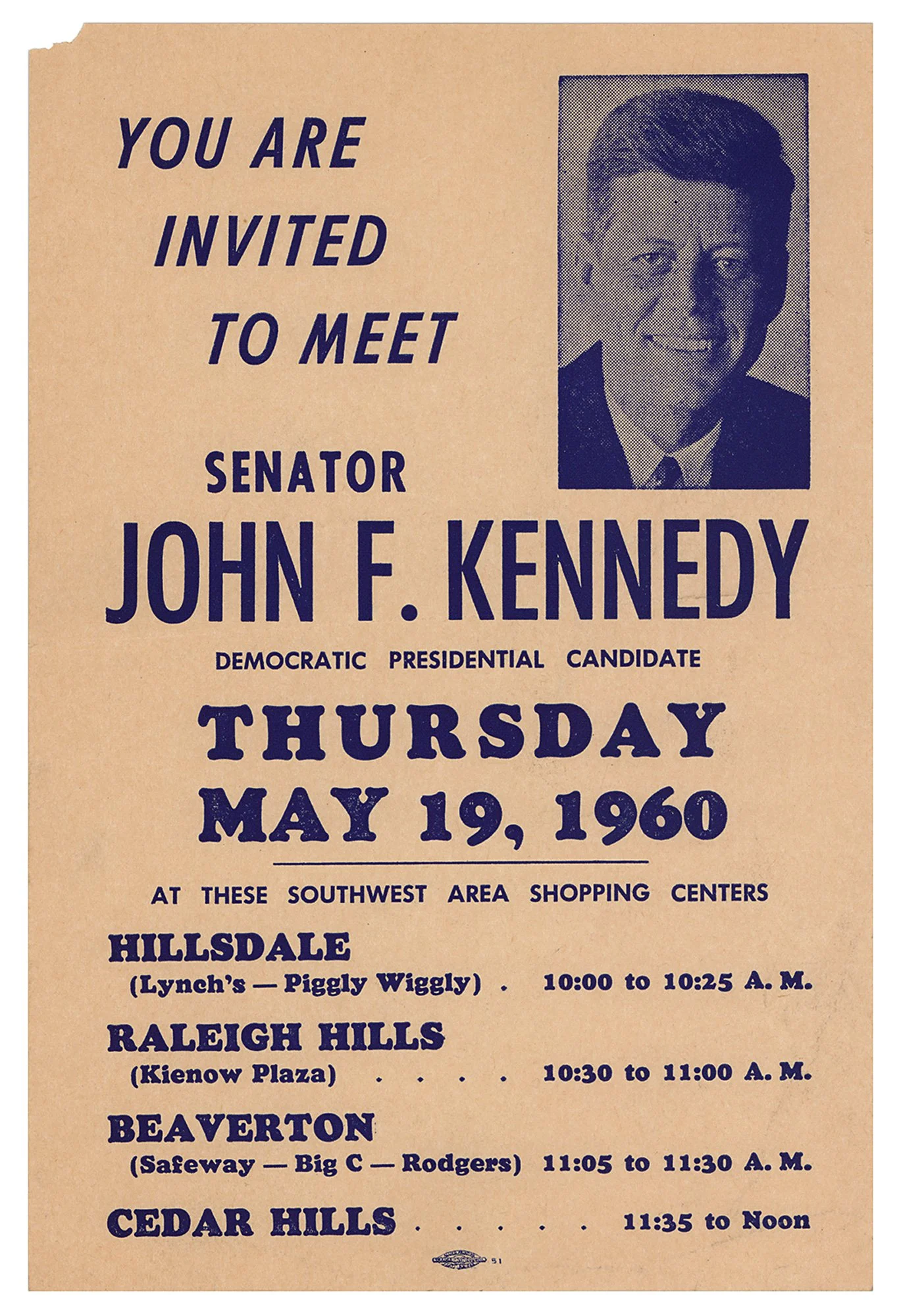
Campaigning in SW Portland on the eve of the Oregon Primary
FOUR. JFK CONFRONTED HIS CRITICS FROM LABOR IN OREGON. And there were plenty of them. They resented his efforts to clean up corruption in organized labor and tested him in Oregon with chilly receptions wherever he went. But JFK never backed down and often won the day by meeting directly with rank-and-file critics. Congresswoman Edith Green ran the Kennedy campaign in Oregon and recalled one confrontation with labor this way.” Rosy (Joseph) McDonald was the president of the Oregon AFL-CIO. It was his job to introduce Kennedy. It was in the hotel, and the room was packed. When we came in it was just the most frigid atmosphere I had ever experienced. And Rosy, I think his exact words were, ―Well, our next speaker, some people like and some people don’t. I give you Senator Kennedy. And there was just the required applause, you know just perfunctory. Kennedy threw away any prepared speech and just talked off the cuff. It was one of the best speeches I ever heard him give.” There are many similar stories of JFK convincing union members in Oregon he was okay.
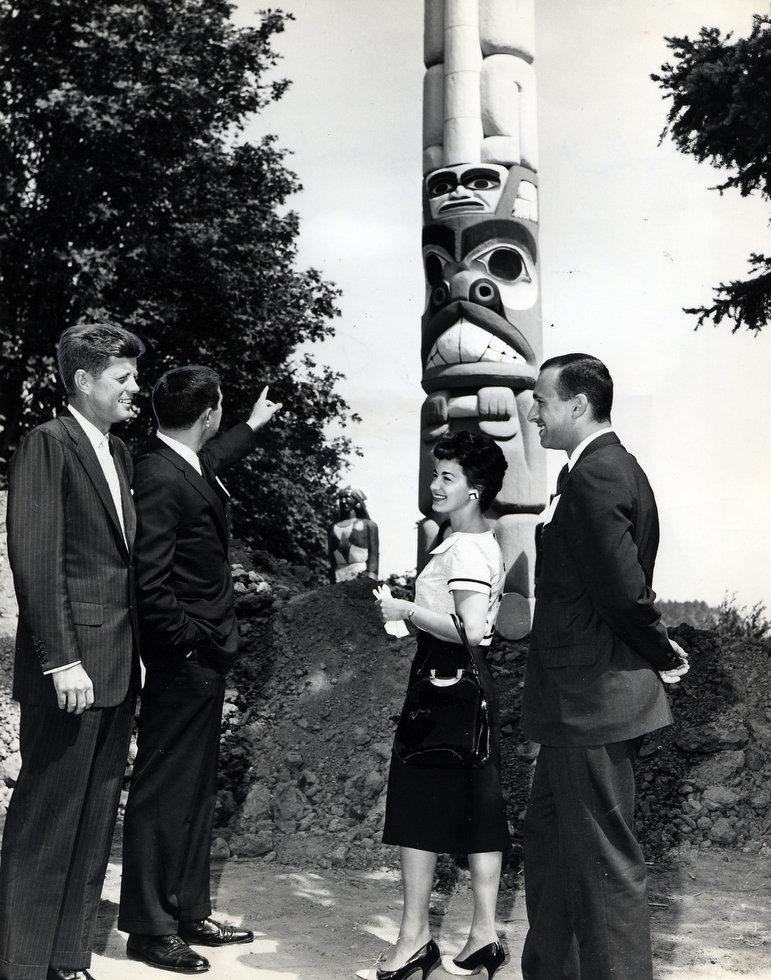
At Hill Villa on Terwilliger Boulevard (now the Chart House) in 1959. The totem pole still stands at that site.
FIVE. JFK WAS A GENUINELY NICE GUY. It wasn’t just union members who were persuaded to support JFK after meeting him in person. Take Wally Wadkins. He was recruited to drive JFK in a parade in Medford because he had a 1959 Lincoln Continental convertible. He made his money in timber and mining. He mentioned to JFK that he was missing the opening day of the fishing season on Klamath Lake with his son so he could drive him in the parade. “I’ll make it up to you. Don’t worry,” Kennedy said. Sure enough, Wadkins was invited to the Inaugural ceremonies after JFK was elected President. Then there’s Mary Kelly of Medorrd. She organized the FDR Dinner at which JFK spoke in 1959 and 1960. The dinner for 1400 was a pot luck affair. Kelly says afterwards Kennedy went into the kitchen and thanked each volunteer worker individually. She says he also sent Christmas cards each year to the volunteers.
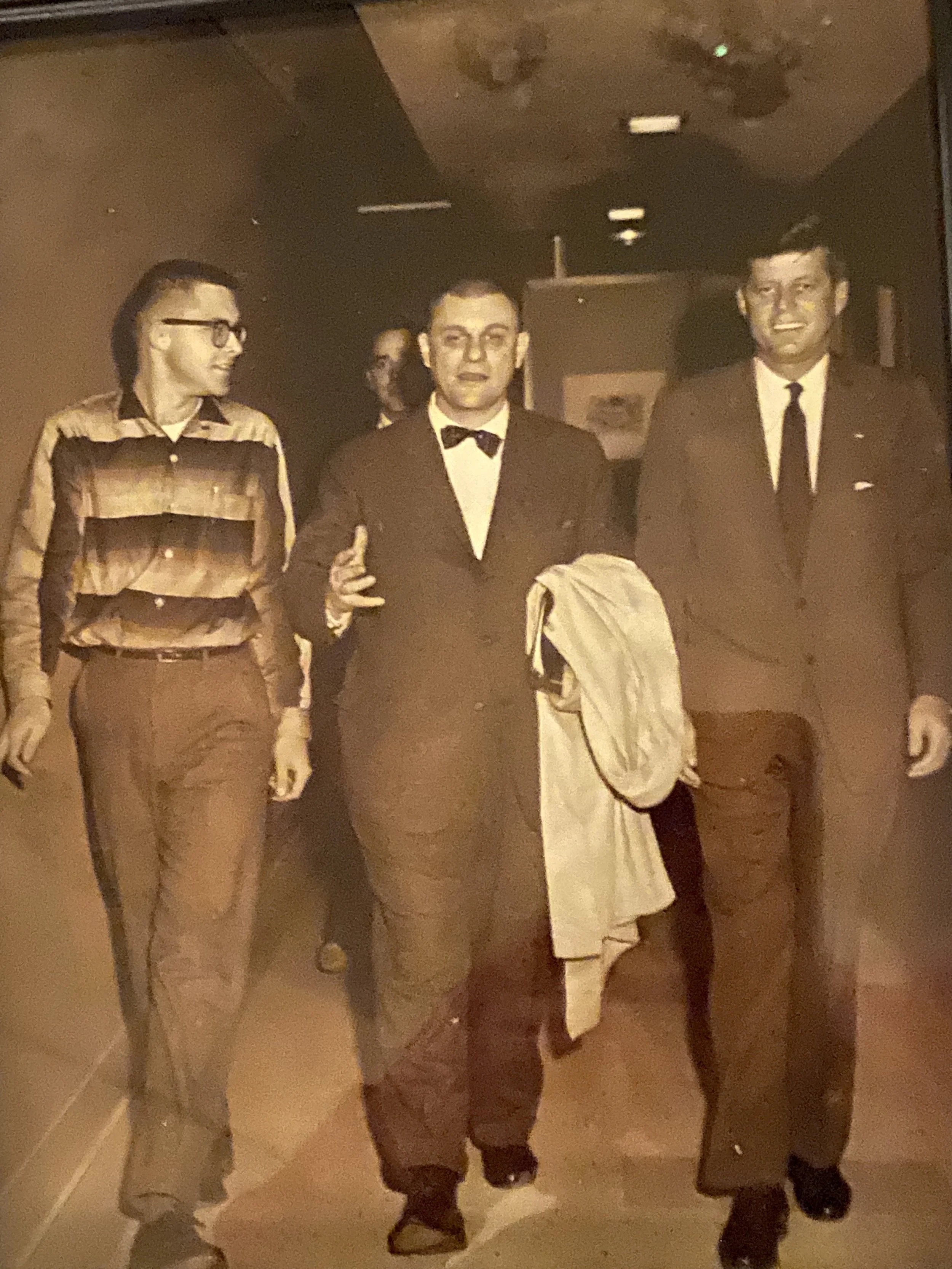
At Portland State College with (L) Dick Feeney and (C) Professor/pundit Marko Haggard. April 1959.
In the General Election in Oregon in November, JFK lost to Richard Nixon 52.5% to 47.3%. ThThat wasn’t a surprise. The Kennedy campaign barely appeared in Oregon after the May Prprimary. But from the earliest appearances here in 1957 to the last campaign swing to the State Fair in September 1960, it sounds like it was fun while it lasted.
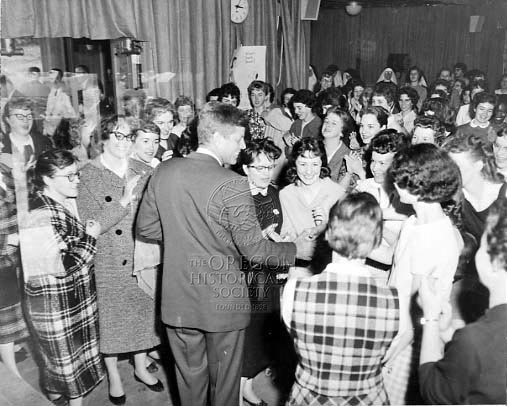
JFK at Marycrest High School.
WHY AM I RECEIVING THIS?
Most Sunday and Tuesday mornings I send out a blog post which will appear in the Thursday Edition of the PDX Hibernian Independent. You're receiving this because a. you asked to b. I owe you content for supportng my short-lived Substack swing of the bat or c. I thought you might like a preview of the PDX HI.