
Bombs fell on Belfast and she kept singing. Lives were saved.
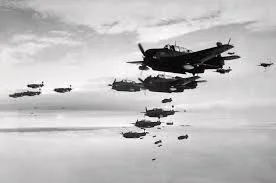
Hitler’s Luftwaffe brought World War Two to Belfast 85 years ago on April 15, 1941. That evening, some 200 German war planes took off from now-occupied Northern France determined first to destroy the wartime infrastructure in the capital of Northern Ireland and second to weaken the will of its citizens. The first air raid sirens went off at 10:40 P.M. Incendiary bombs, land mines and high explosives rained down on Belfast until 5 A.M the next day.
Third Reich flight crews almost accomplished that first mission. But, despite killing 967 civilians and wounding another 1,500, they failed to carry out the second mission. One of the reasons the citizens of Belfast never surrendered to despair was Delia Murphy.
Only London suffered more from German aerial attacks during those first years of the War. The Republic of Ireland didn’t take sides in World War Two, so never suffered German bombings. Northern Ireland, still a part of the United Kingdom, was fair game for the Germans. Here’s the thing though, from tragedy on April 15 and 16, a united Ireland emerged, if only for a few days.
At next week’s Portland Hibernian Society meeting at Kells Restaurant, Hibernian Tim Birr will tell the story of how the Dubin Fire Brigade headed to Belfast to provide mutual aid after the April 16th Luftwaffe bombing. Such cross-border cooperation was unheard of in those days. The Irish Times editorial on the 17th summed up the situation thusly, Has it taken bursting bombs to remind the people of this little country that they have common tradition, a common genius and a common home?
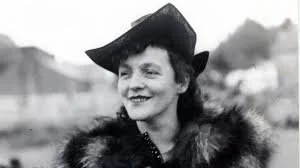
Who was Delia Murphy? (The most popular female Irish Ballad singer ever, say many)
Before Sinead O’Connor and Dolores O’Riordan and Dolores Keane, there was Delia Murphy. Born one of eight girls in 1902 in the West of Ireland to a very wealthy family, she became Ireland’s first pop star during the 1930s, with the 78 rpm record sales and sold-out concerts to prove it.
The most amazing chapter of her life story was written as those bombs fell on Belfast. She was the featured act the night of April 15 at a benefit in Ulster Hall for St Malachy’s Gaelic Athletic Club. She was on stage when air raid sirens went off. What happened next is the subject of several books and articles. This is from the website Wartime NI.
At around 1130hrs, she finished what should have been her last song. Soldiers stood by the doors as the crowd went to leave. The fire warden warned that German planes were over the Co. Down coast and that no one was to leave until the alarm was over.
Delia Murphy continued to sing throughout the raid. She finished only when the explosions faded. She remained calm and saved lives, convincing people to stay inside. The crowd sang and danced through the night until almost 0500hrs. This was Belfast’s “Blitz Spirit” moment. As the crowds left for home, they saw horrific sights greeting them.
As it turned out, Ulster Hall was a safer place to be when the bombs fell than many of the bomb shelters. Most of the Irish Catholics in the crowd went home that morning to find their houses among the 55,000 houses that were damaged, leaving 100,000 temporarily homeless.
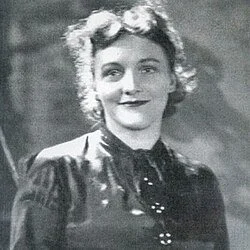
This is the same Delia Murphy who saved hundreds of lives in Italy
After that life-saving performance, Delia Murphy wasn’t done with her World War Two heroics. Her husband was Tom Kieran, Ireland’s representative to the Vatican during the war. It was there that she took on the Third Reich. This is from the Dictionary of Irish Biography.
Unknown to her husband she was an accomplice of Monsignor Hugh O’Flaherty in smuggling escaped prisoners of war and other allied personnel into the Vatican City, often using the legation's car to drive escapees through checkpoints. The British war office recommended after the war that she be decorated; the honour was turned down. Click here to read more at the PHS website about Monsignor O’Flaherty from Killarney.
This is from an obituary/tribute that ran in the Irish Times,Delia Murphy, the blackbird of ballads who sang her heart out through the good times and the bad times and who sought solace in alcohol when the strain of being a diplomat's wife got too much for her. Delia was considered to be a bit of a character and, like Brendan Behan after her, was someone everyone had met or at least had a story about. And because one story has to be capped by another, many of them are hard to believe.
Ballads and come all ye's were considered rough, pub songs but the more her songs were heard, the more popular she became though never, it has to be said, with the middle class, who preferred something more exalted. Ireland, at that time, was entering the world stage and few actors wanted to be reminded of their humble, rural origins.
Let’s get the final words in honor of Celia Murphy from Ireland’s greatest ballad singer of the second half of the Twentieth Century, Liam Clancy. "Her main contribution was that she made us feel that we could respectably sing our own songs.”
You can find those songs on various digital services and You Tube. If you only check out one, make it this one: Moonshiner. (“I’m a rambler, I’m a gambler a long way from home. If you don’t like me then leave me alone.”)
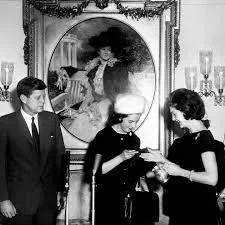
On March 17, 1961, President John F. Kennedy received greetings and gifts at the White House from the wife of Ireland's Ambassador to the US, Delia Murphy. Gifts included a bowl of shamrocks, the Kennedy coat of arms and an antique silver christening cup for John F. Kennedy, Jr.
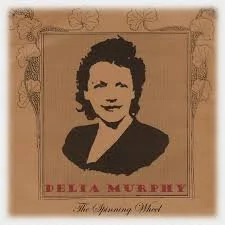
The Moonshiner - Lyrics by Delia Murphy
I've been a moonshiner for many a year
And I've spent all me money on whiskey and beer
I'll go to some hollowand I'll set up my still
And I'll make you a gallon for a ten schilling bill
I'm a rambler, I'm a gambler,
I'm a long way from home
And if you don't like me
You can leave me alone
I'll eat when I'm hungry
And I'll drinkwhen I'm dry
And if moonshine don't kill me
I'll live till I die
I'll go to some hollow in this country
Ten gallons of wash and I'll go on a spree
No woman to followand the world is all mine
I love none so well as I love the moonshine
Moonshine dear moonshine oh how I love thee
You killed my poor father but dare you kill me
Bless all moonshiners and bless all moonshine
For their breath smells as sweet as the dew on the vine
FUN FACT
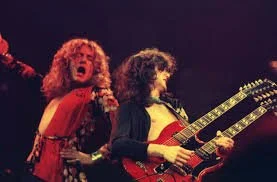
Ulster Hall, where Delia Murphy kept singing while the bombs fell on Belfast, is where Led Zeppelin first played Stairway to Heaven in public on 5 March 1971
WHY AM I RECEIVNG THIS?
Every Sunday (except Easter) and Tuesday morning I send out a blog post which will appear in the Thursday Edition of the PDX Hibernian Independent. You're receiving this because a. you asked to b. I owe you content for supportng my short-lived Substack swing of the bat or c. I thought you might like a preview of the PDX HI.